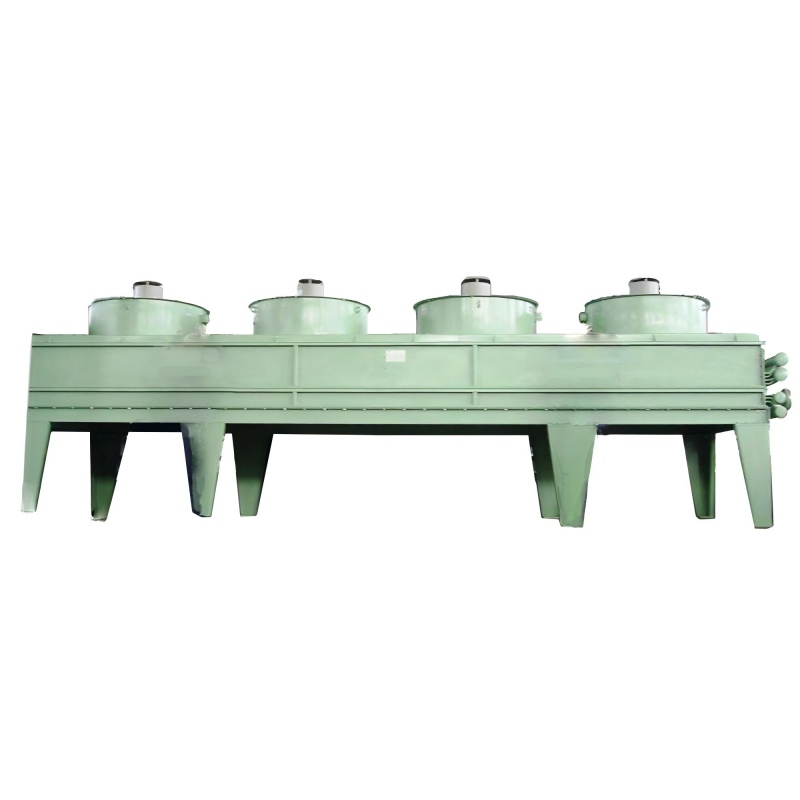
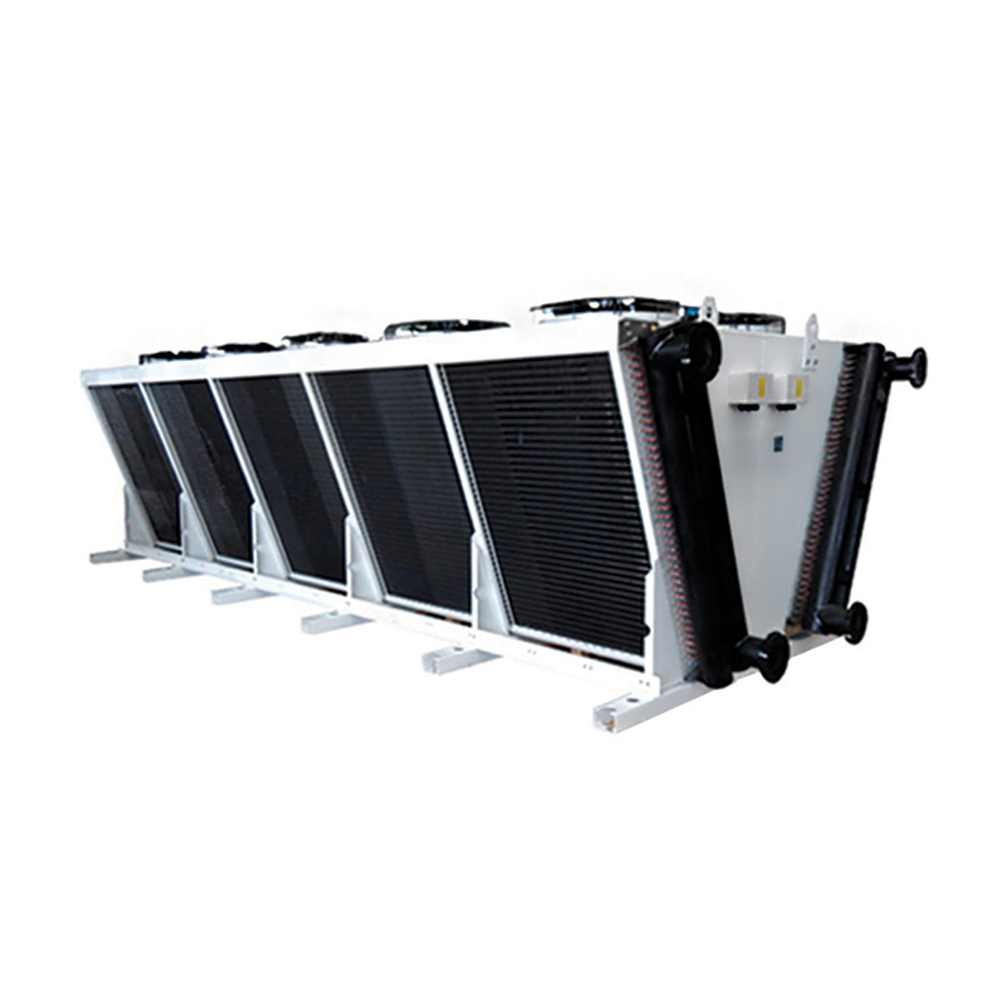
Look, when most folks hear radiator innovation, they think raw cooling performance or maybe weight savings. That’s part of it, but the real, quieter shift—the one that’s genuinely moving the needle on sustainability—is happening in the materials labs and on the factory floors where thermal efficiency, longevity, and system integration are being rethought. It’s less about a single breakthrough and more about a cumulative grind of improvements that reduce total lifecycle impact. The common mistake is to view the radiator as a passive, dumb heat exchanger. In modern systems, it’s an active player in managing energy flows, and that’s where the sustainability gains are being unlocked.
The Material Shift: Beyond Aluminum and Glycol
For years, the story was aluminum cores and copper tanks. Light, decent conductivity. But the environmental cost of primary aluminum production is massive. What we’re seeing now is a push towards high-content recycled aluminum alloys. The trick isn’t just using recycled material; it’s engineering an alloy that maintains the necessary thermal conductivity and, crucially, corrosion resistance with a high percentage of post-consumer scrap. I’ve seen prototypes fail spectacularly because the recycled mix introduced impurities that created galvanic hotspots, leading to premature failure. That’s not sustainable if it needs replacing every two years.
Then there’s the coolant itself. Extended-life organic acid technology (OAT) coolants are becoming standard, but the innovation is in formulations that work optimally with these new alloy surfaces and different solder fluxes. At SHENGLIN, we’ve spent an inordinate amount of time testing compatibility between their latest brazed aluminum cores and next-gen coolants. It’s not glamorous work—it’s thousands of hours in thermal cycling rigs—but getting that synergy right can push service intervals out by tens of thousands of miles, reducing fluid waste and maintenance events.
And let’s talk about coatings. A thin, durable hydrophilic coating on the fin surface might seem minor. But in real-world conditions, it changes how water shears off the fins, improving condensation efficiency in charge air coolers and reducing the fan power needed. It’s a small efficiency gain that compounds over millions of miles of trucking operations. The challenge is making that coating survive road grit, pressure washing, and chemical exposure. We’ve had batches delaminate, which was a messy, expensive lesson.
System Integration: The Radiator as a Thermal Manager
This is the big conceptual leap. The radiator is no longer just dumping heat to the atmosphere as fast as possible. It’s about managing the quality of heat and integrating with the vehicle’s entire thermal system. Take waste heat recovery. In some heavy-duty designs, we’re looking at staging radiators—a high-temperature loop for the engine, and a lower-temperature loop for things like the EGR cooler or even cabin heat. By precisely controlling these loops, you can potentially funnel waste heat to an Organic Rankine Cycle system to generate auxiliary power. The radiator’s job becomes more nuanced: rejecting heat only when it’s truly waste, and allowing other systems to harvest it first.
I recall a project with an electric bus manufacturer. They didn’t just need a radiator for the battery and motor cooling; they needed it to interface seamlessly with a heat pump for cabin climate control. The radiator’s operating temperature range and flow characteristics had to be tuned so that in winter, it could act as a heat source for the heat pump, drastically reducing the drain on the battery for heating. The innovation was in the control logic and the valve architecture around the radiator core, turning it from a passive component into a dynamically managed thermal resource. Shanghai SHENGLIN M&E Technology Co.,Ltd provided the core expertise on the compact, high-pressure-drop cores that made this architecture physically possible.
This integration demands smarter, lighter components. Plastic end tanks with integrated sensor ports and mounting points are now common, but the innovation is in the polymers themselves—glass-reinforced nylons that can handle higher temperatures and pressures from turbocharged downsized engines, reducing weight versus aluminum and allowing more complex, space-saving geometries. You can see some of these integrated designs on their portfolio at https://www.shenglincoolers.com, where the focus on industrial cooling tech translates into robust automotive solutions.
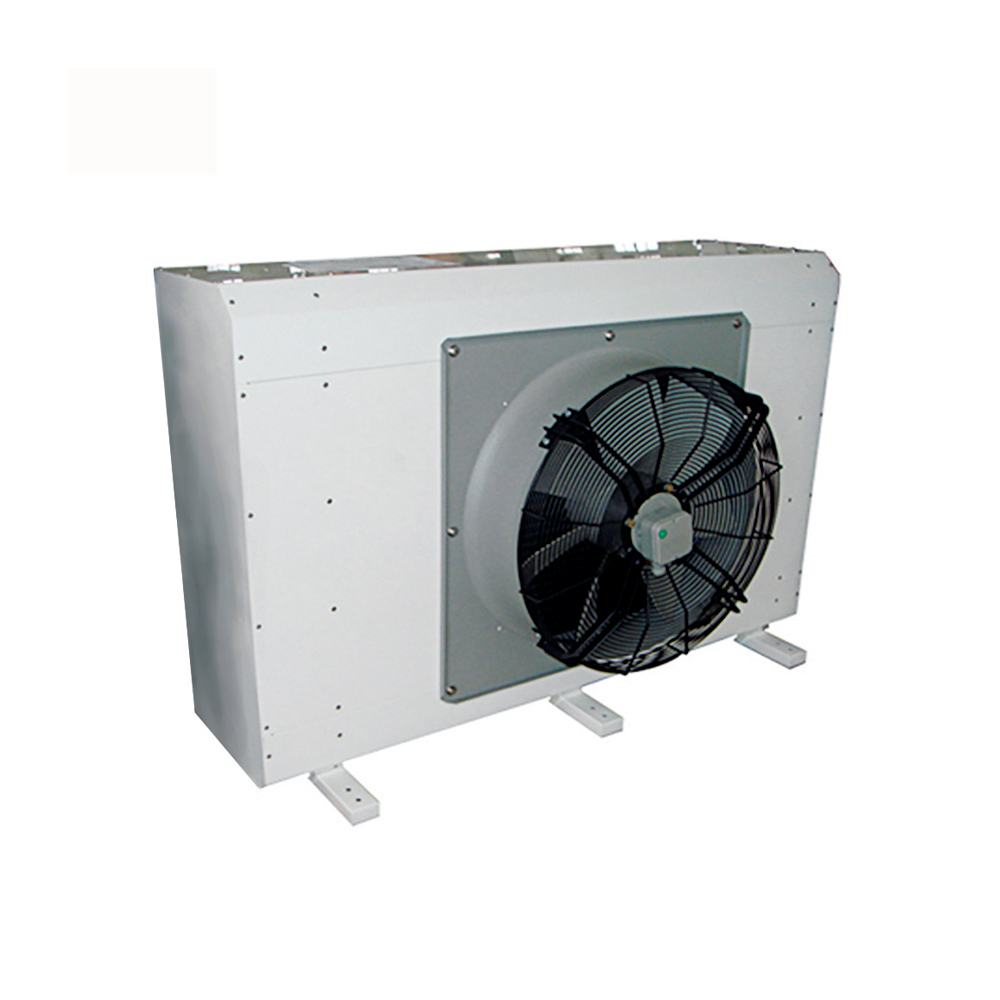
The Manufacturing Calculus: Less Waste, More Precision
Sustainability isn’t just about the product on the road; it’s about how it’s made. The move from mechanical expansion to vacuum brazing for aluminum cores was a watershed. It uses less material (thinner fins and tubes can be bonded) and creates a stronger, more reliable joint with less thermal resistance. But the furnace atmosphere control is everything. An oxygen leak during a braze run doesn’t just ruin a batch of cores; it’s a total energy and material loss. The innovation here is in process control and monitoring—using AI-driven vision systems to inspect braze flow on every single tube-to-header joint post-furnace, catching defects that would lead to field failures.
Water usage is another huge one. Core washing and flux removal used to be a major water consumer. Closed-loop systems with advanced filtration and recycling are now table stakes for any manufacturer serious about sustainability metrics. I’ve visited plants where the water discharged from the radiator production line is cleaner than what came in. That’s a significant operational shift that doesn’t get marketed on the product datasheet but is a massive part of the overall footprint reduction.
Then there’s packaging and logistics. Radiators are bulky. Innovations in nesting shapes and using biodegradable, plant-based foam for transit protection instead of petroleum-based plastics might seem trivial, but when you’re shipping thousands of units globally, the reduction in fossil-fuel-derived packaging and the space savings in shipping containers add up to a real carbon reduction. It’s the unsexy, backend work that makes a difference.
Real-World Durability vs. Theoretical Efficiency
This is where theory meets the road, literally. You can design the most thermally efficient radiator in the world, but if it clogs with bugs, road salt, and debris in two seasons, its lifecycle sustainability is terrible. Innovation here is in serviceability and cleanability. Some designs now incorporate easy-access panels or even reverse-flush ports as standard. More subtly, fin spacing and patterns are being optimized not just for airflow resistance, but for how easily material passes through the core rather than getting stuck. A slightly less efficient core design that maintains 95% of its performance after 200,000 miles is far more sustainable than a peak-efficiency design that degrades to 70% in the same period.
Corrosion remains the silent killer. For off-highway and marine applications, this is paramount. We’re seeing more use of sacrificial anodes integrated into the tank design, and even coatings that self-heal minor scratches. The sustainability win is massive: preventing the entire assembly from becoming scrap and needing replacement, along with the coolant disposal and manufacturing impact of a new unit. SHENGLIN’s focus on industrial cooling technologies gives them a leg up here, as they’re used to dealing with harsh environments that consumer automotive rarely sees.
The data from telematics is now feeding back into design. We can see real-world temperature profiles, fan engagement cycles, and failure modes. This has led to innovations like zoning the fin density within a single core—putting the most aggressive cooling where the data shows the hottest, most consistent heat load is, and using a more open, less clog-prone design in other areas. It’s a bespoke approach that was impossible before we had this flood of operational data.
The Unfinished Business: The Circular Economy
This is the next frontier, and it’s messy. How do you design a radiator for disassembly and material recovery? Current brazed aluminum monoblocks are a nightmare to recycle efficiently—you’re basically shredding and hoping the aluminum smelter can deal with the contaminants. Some are experimenting with snap-together or mechanically joined cores that allow for separation of aluminum, copper, and plastics at end-of-life. The trade-off is often cost and potential leak points.
There’s also a growing niche for remanufactured radiators for the aftermarket, not just recored but fully tested and certified. The business model is tough—collecting cores, cleaning, testing, rebuilding—but the lifecycle analysis shows a huge win if it can be scaled. It requires designs that are meant to be taken apart, which is a fundamental rethink. Some of the work on modular systems for data center or power generation cooling, like what you’d see from an industrial specialist, might eventually trickle down to automotive.
So, does radiator innovation boost sustainability? Absolutely, but not in a single, headline-grabbing way. It’s in the gram of weight saved through a better alloy, the kilowatt-hour of fan energy not used over a million miles, the gallon of coolant not changed, the ton of CO2 not emitted in primary material production, and the extra year of service life before replacement. It’s a slow, cumulative engineering grind that turns the humble radiator from a commodity into a sophisticated thermal and environmental management device. The real innovation is in changing how we think about its role altogether.